



 55 / 100

And that’s just the appetiser. Over the next
year, Bruneians can expect a full buffet of eco-
friendly programmes: food waste digesters at
shopping centres, public awareness drives,
the Plan.Eat.Save campaign, and even a Food
Waste Reduction Guidebook for households and
businesses alike.
For those in a rush, there’s also the Bite-Size Info
Pack, a snack-sized version of eco-education on
how to shop smart, cook cleverly, and waste less.
MASTERING THE KITCHEN
GAME
Let’s talk strategy. The war on waste is won (or
lost) in the kitchen. And one of the simplest ways
to win? Meal planning.
Before you yawn and turn the page, hear us out.
Taking just 10 minutes to jot down what you’ll
cook this week means you’ll shop with intention.
You avoid buying random things that will be left
forgotten and make better use of what’s already
in your fridge.
Shopping with a list? Essential. Bulk-buying
perishable items “just in case”? Best avoided
unless you’ve got a plan (and freezer space)
to match. Portion estimation also deserves a
mention. Knowing howmuch your family actually
eats helps prevent leftovers from sitting unloved.
A little fridge knowledge goes a long way too.
Not all producewants the same conditions. Leafy
greens like a bit of moisture, while apples and
citrus prefer the cool and dry.
And labelling leftovers with the date you
made them? Game-changer. No more mystery
containers.
WASTE NOT, WANT NOT
So what’s in it for you? Well, aside from helping
the environment, you’ll likely save money. A lot
of it.
Reducing food waste means making fewer trips
to the shop, smaller grocery bills, and less time
playing “what’s that smell?” in the fridge.
And Brunei benefits, too. Less food waste in
landfills means less greenhouse gas emissions.
That supports the country’s Green Protocols and
Sustainable Development Goals, making your
daily habits part of something much bigger.
On top of that, community-driven efforts help
build stronger food safety nets. What might
seem like scraps to one household could be
transformed into nourishment for others,
compost for community gardens, or awareness
in young minds about the value of what’s on
their plate.
The road to a food-smart Brunei isn’t about
perfection. It’s about participation. Taking stock
of what’s already in your kitchen before heading
to the shop. Being creative with leftovers (turn
that roast chicken into soup or sandwiches!).
Learning how to store and freeze food properly.
It all adds up.
Because at its core, managing food waste is
about appreciation. Not just of the food itself,
but of the people who grow, transport and sell
it—and the planet that makes it all possible.
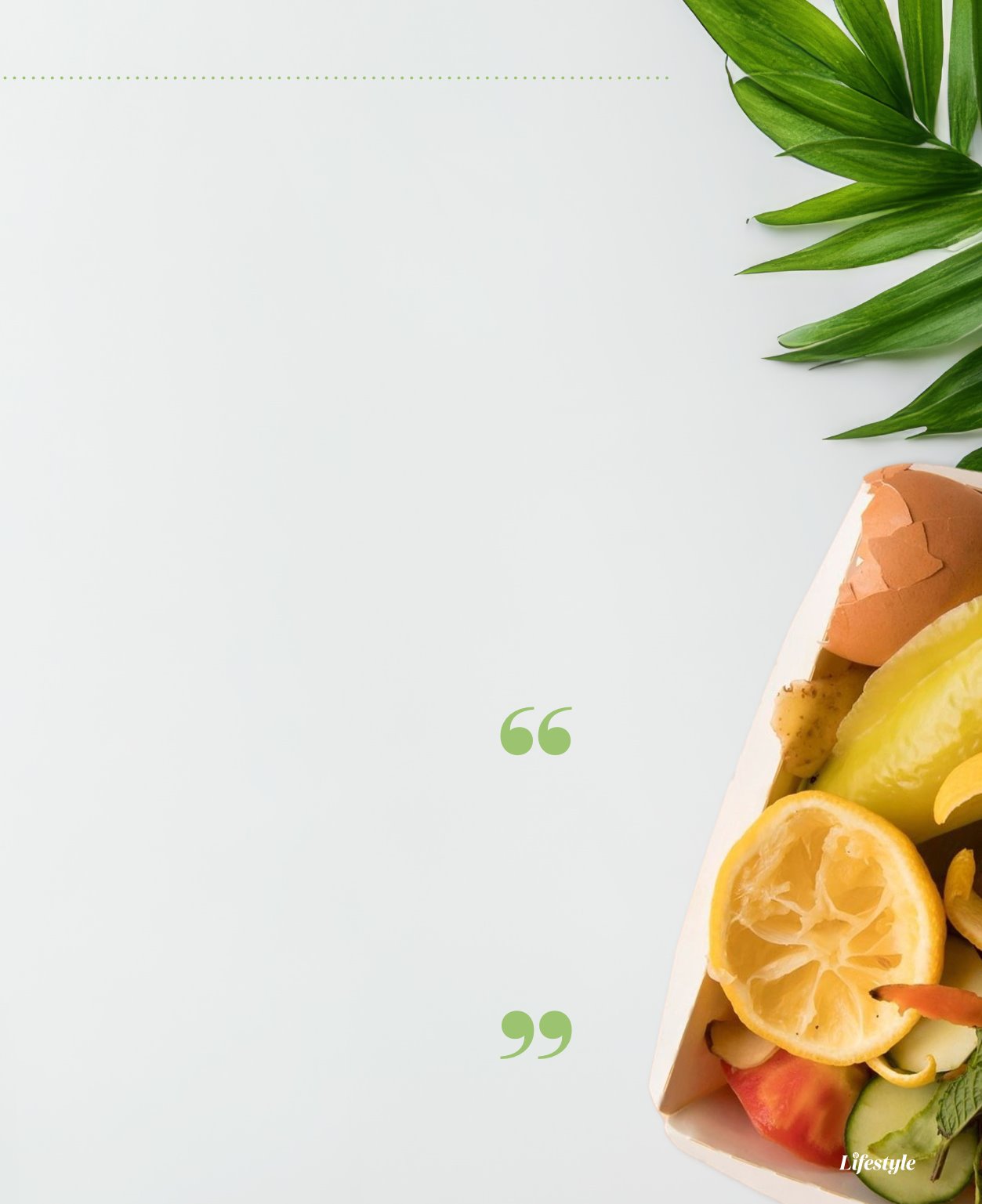
So next time you’re about to dump dinner scraps
into the bin, pause. Could it be lunch tomorrow?
Could it be compost? Could it feed someone
else? Chances are, there’s something you can do
with it instead of just letting it rot in the landfill.
At its core, managing
food waste is about
appreciation. Not just
of the food itself, but of
the people who grow,
transport and sell it—
and the planet that
makes it all possible.
53