



 34 / 100

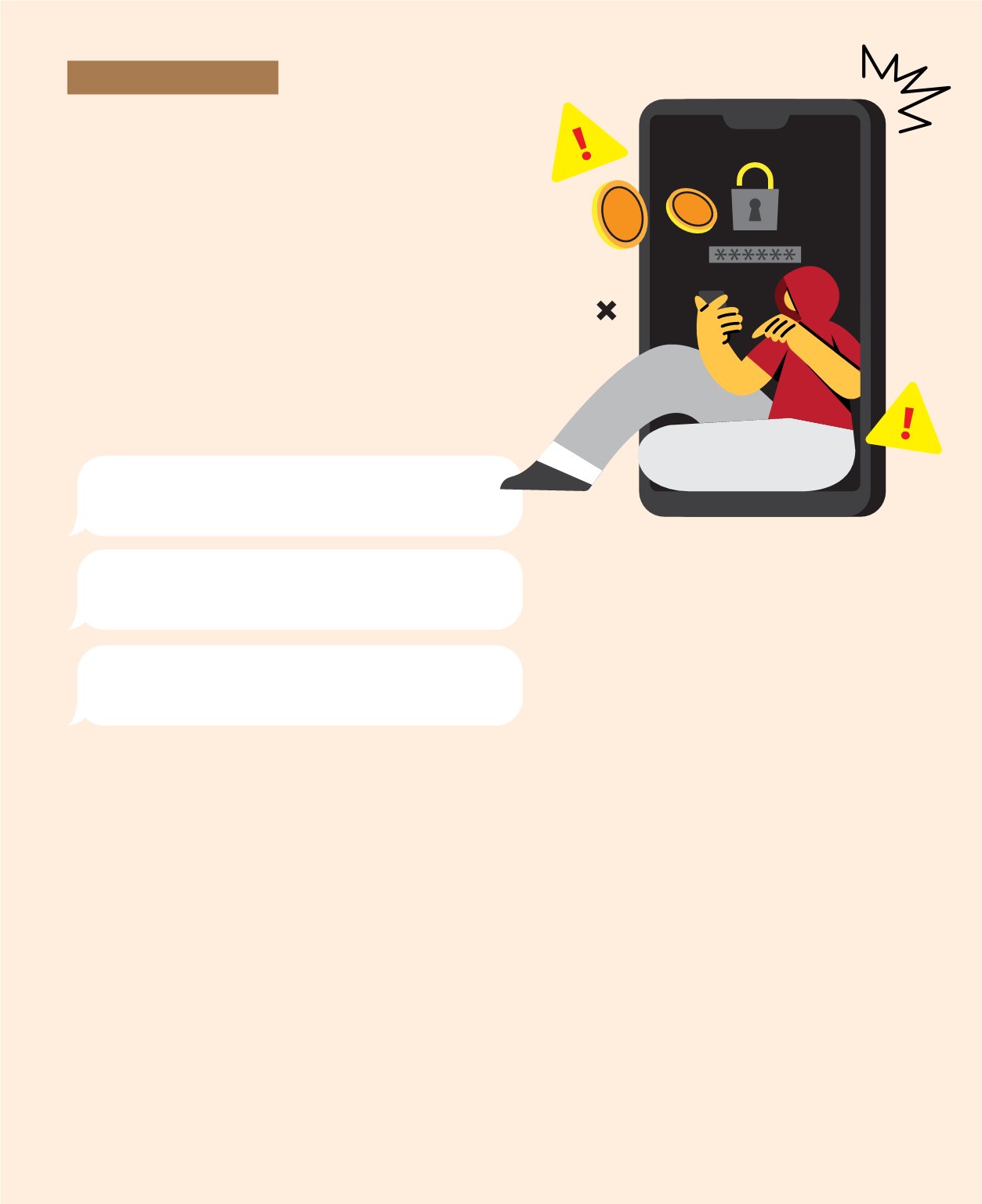
All you have to do is invest $100, and you’ll be making
up to $2,000 in passive income in just a few months.
Online job opportunity with a daily salary of $150-$200.
No experience required and training is provided!
We have detected suspicious transactions on your bank
account. Please log in to verify.
MESSAGES WITH LINKS OR
ATTACHMENTS
Phishing is another common tactic that
scammers use to steal your money or
personal information by impersonating well-
known organisations. They send emails or
messages with a link that resembles the real
website and record your personal data such
as log in details and credit card number.
Oneway todetect phishing attempts is to look
at the email address. Employees of legitimate
companies will have professional and unique
domains, but some scammers try to match
their email address as closely as possible.
For example,
[email protected]is a real
address but not
[email protected](notice
the “1” here) or
support@paypal-security. com(fake domain). Typos and bad grammar
are also common in phishing messages.
If you receive a phishingmessage, don’t click
on any links or attachments. NEVER reply to
phishingemails because it indicates that your
email address is active, and scammers will
target you again in the future. Your best bet is
to report it as phishing to the email provider,
or alert the IT department if it lands in your
work email account.
time. The catch? They need you to “invest”
first.
A common tactic to gain a victim’s trust is to
let them have a small win at the beginning.
Suppose Person A pays $6,000, and they
receive $500 every month in return. Things
seemingly go well for the first few months
and Person Amight invest more or refer their
friends. But then the money stops coming
in, and the scammer suddenly disappears.
Remember that in a professional setting,
every investment carries some degree of
risk. Be skeptical if someone claims you’re
“guaranteed” to make big bucks if you join
their investment scheme.
If any of these phrases sound dodgy to you,
that’s because they are. In 2024, the amount
of money lost to online scams in Brunei
reached BND5 million – more than double
from the previous year. Financial scams are
everywhere, targeting victims in the form of
phishing emails, fake job offers, guaranteed
high returns, and most recently, deepfake
videos impersonating police officers.
Scammers are getting smarter, especially
with themisuse of AI.While not an exhaustive
list, here are some warning signs to look out
for.
UNREALISTIC HIGH RETURNS
Financial scams often promise high returns,
with little to no risk within a short period of
Spot the signs of a scambefore it’s too late
Too good to
be true?
It probably is
BANKING & FINANCE
32
BORNEO BULLETIN YEARBOOK 2026